

Explore mountains
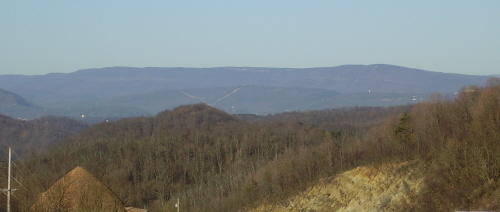
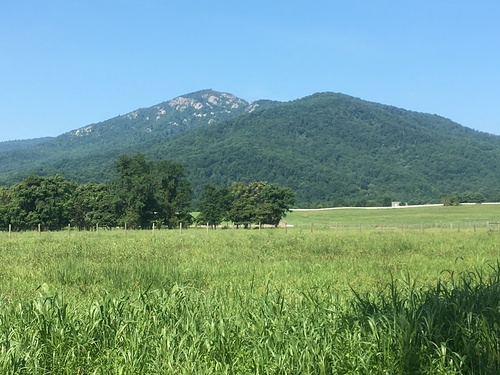
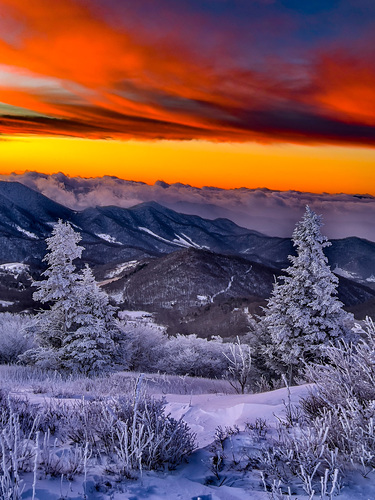
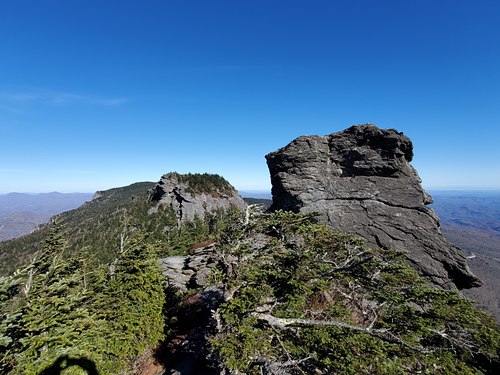
Discover one of these nearby mountain peaks and start planning your adventures.

17000+locations
From mountain peaks and trails to huts and lodges — covering 120 countries with everything you need to plan your next adventure.
25+years of mountain forecasting
Thoroughly tested and trusted by climbers and mountaineers worldwide for accurate, reliable forecasts in challenging mountain conditions.
3000+user submitted climbing notes
Share your experiences, keep a record of your travels, and learn from our global community of mountain enthusiasts.

Detailed insights for your favourite summits
Get ahead of the elements with MountainPro: unlock 16-day forecasts, hourly detail, and offline maps to confidently plan all of your adventures.
Get PremiumBrowse popular peaks
Get the Mountain-Forecast app
Elevate your mountain adventures with the official Mountain-Forecast app. Detailed mountain weather forecasts for over 12,000 peaks around the world.
Mountain-Forecast is one of the most popular sources of detailed mountain weather.
Trusted by climbers, skiers, mountain bikers, and outdoor sport enthusiasts, our mountain forecasts cover multiple elevations and weather updates every six hours.
Main Features
- Hourly forecasts
- Long-range 16-day forecasts
- Detailed topographic maps (Display your GPX route on top)
Climbing and hiking notes from our community
First-hand mountain reviews, route tips, and trail guides
Mount Everest
Hey everyone,
I wanted to put together a quick, friendly rundown of what it’s actually like to climb Everest from the Nepal side—the kind of stuff that’s useful to know if you’re thinking about it someday or just curious how it all works behind the scenes.
So first off, getting to Everest isn’t just “fly to Kathmandu and climb.” You fly to Lukla, which is that famously tiny mountaintop airport, and then you hike for over a week up the Khumbu Valley. Honestly, that part is beautiful—Sherpa villages, prayer flags everywhere, yaks with bells, and a mix of pine forests and huge mountains towering above you. Nights are in simple teahouses: wooden rooms, thin mattresses, and lots of dal bhat. Wi-Fi exists… sometimes… kind of.
By the time you reach Base Camp (~5,350 m), it already feels like a small tent city. Teams have massive dining tents, cooks, heaters, solar panels, and even espresso machines (depending on who you climb with). The glacier under the whole thing groans all night, and the sound of seracs cracking becomes weirdly normal. You end up living here for a month or more, going up and down the mountain to acclimatize.
The climb itself starts with the place everyone talks about: the Khumbu Icefall. It’s basically a frozen river of giant ice blocks slowly moving downhill. The route changes constantly. You walk across crevasses on aluminum ladders tied together with rope, and everything is held in place by fixed lines. This is one of the most dangerous parts, so you go through it early in the morning before the sun softens the ice.
Above the Icefall is Camp I, then a long, flat glacier valley called the Western Cwm, which feels like a solar oven. That leads to Camp II, where many teams spend a lot of acclimatization time. After that, the route gets serious on the Lhotse Face—hard blue ice at 40–50 degrees—which brings you to Camps III and IV.
Camp IV (South Col) feels like another planet. The wind is relentless, the air is brutally thin, and everything is loud, cold, and uncomfortable. This is where you switch to supplemental oxygen (unless you’re one of those ultra-elite no-O₂ climbers). Summit day usually starts around midnight. You climb in a long line of headlamps, and key landmarks like the Balcony, the South Summit, and the final ridge are absolutely unreal—narrow, exposed, and dramatic. The Hillary Step isn’t really the big block it once was, but the area is still steep and technical.
Reaching the top of Everest doesn’t feel like triumph as much as disbelief—and you only stay a few minutes, because the real goal is getting back down safe. The descent is just as tiring and, honestly, more mentally draining.
A few things I’d tell any friend:
Be in the best shape of your life. Everest is long, cold, and unforgiving.
Pick a good, experienced operator—it makes everything safer.
Acclimatize slowly; rushing is how people get hurt.
And above all: stay humble up there. The mountain doesn’t care how strong you are.
Altitude Junkies
Nepal
02 Dec 2025
Imja Tse
First trip to Nepal and Imja Tse coming in Late April 2020. I loved Bill's note ....I would love to hear more from others. Looking at the forecasts it seems to warmer than 'Baltic'....rapid climate change or just yearly variation.
Training for Ice and Crevasses ladder crossings are indeed required and I've been working on it for a while. Older than Bill so good prep is required
I plan to post upon my return.
Lou Hoebel
United States
09 Feb 2020
Ama Dablam
Ama Dablam is one of Nepal’s most iconic and technically demanding peaks, famous for its sharp ridges, exposed climbing, and the hanging “Dablam” glacier that gives the mountain its name. Although not extremely high by Himalayan standards, it is a serious technical climb requiring strong alpine skills and careful logistics.
Access & Approach
The standard approach begins with a flight from Kathmandu to Lukla, followed by a multi-day trek up the Khumbu Valley. The route passes through well-known Sherpa villages such as Phakding, Namche Bazaar, Tengboche, and Pangboche, where climbers lodge in simple teahouses. Rooms are basic, unheated, and often shared; meals are mostly dal-bhat, noodles, soups, and eggs. Water sources are plentiful but should be filtered or purified.
From Pangboche, a short hike leads to Ama Dablam Base Camp (~4,600 m), situated on a grassy plateau with good tent sites and proximity to fresh water. Some operators maintain semi-permanent dining tents and a kitchen setup. Occasional small huts near Base Camp offer meals but are not substitutes for expedition accommodations.
Route & High Camps
The Southwest Ridge is the classic and most commonly climbed route.
Camp I (~5,650 m): Reached by scrambling up steep moraine and rocky ridges. The terrain involves fixed ropes in places and mixed rock/snow.
Camp II (~6,000–6,200 m): Perhaps the most technical part of the climb. Climbers negotiate exposed ridges, rock slabs, and the well-known Yellow Tower, a vertical rock step. Camp space is limited and often crowded.
Camp III (~6,300 m): Set near the Dablam hanging glacier. Steep 50–60° snow and ice slopes lead to camp. Due to serac danger from the glacier, some expeditions skip Camp III and go directly from Camp II to the summit.
Summit Day: The final push involves sustained steep snow/ice (often 60°+), high exposure, and cold temperatures. Summit day typically takes 8–14 hours, depending on weather and whether Camp III is used.
Technical Requirements & Hazards
Ama Dablam is not a trekking peak. Climbers must be proficient with:
crampon and ice-axe use
fixed rope systems (jumaring, rappelling)
mixed rock/ice climbing
moving efficiently on exposed terrain
Objective hazards include rockfall, serac collapse from the hanging glacier, avalanches, and altitude-related illness. Weather can change rapidly, and high camps often have limited water and no shelter beyond tents.
Permits & Logistics
Climbers must obtain:
an Ama Dablam climbing permit
Sagarmatha National Park entry permit
Khumbu Pasang Lhamu municipality permit
Most climbers join a guided expedition for logistical support: base-camp staff, fixed ropes, tents at high camps, meals, Sherpa support, and gear transport via yaks or porters. Independent climbs are possible but require full responsibility for equipment, tents, and route fixing.
Best Practices
Allow generous time for acclimatization, choose a reputable guiding service, bring reliable personal gear (especially boots, harness, and down clothing), and climb only in stable weather windows. Respect local regulations and environmental guidelines—waste management is strictly enforced.
Altitude Junkies
Nepal
02 Dec 2025
Kala Patthar
나는 10월 21일 대한민국 부산을 출발, 카투만두를 거쳐, 라메찹까지 지프를 타고 루클라로 경비행기로 이동한다.
약 8일차인 10월 28일 칼라파타르에 도착할 예정이고, 다음 날인 29일 EBC를 지날 것이다.
근처 유효한 기상예보를 부탁드린다.
I will leave Busan, South Korea, on October 21st, via Katumandu, and travel to Ramechap by jeep to Lucla by light plane.
It will arrive in Kala patthar on October 28, about day eight, and will pass EBC on the following day, the 29th.
Please give me a valid weather forecast nearby.
KANG YOUNG
South Korea
19 Sep 2024
Kala Pattar
Trekked up Kala Patter the next morning after EBC trek from Gorak Shep. Beautiful saunter up a wonderful very cold valley. Highly recommended. Once at the top several 8000 meter peaks to be seen absolutely stunning! Including Everest.
Gene Courter
United States
09 Oct 2023
Cholatse
Cholatse is a technical peak and the expedition will place fixed ropes where necessary for the safety of all the climbers and staff. We have allocated 14 days at base camp and above to allow ample time for rope fixing as well as contingency days in case we experience bad weather.
We follow a cautious acclimatization schedule at base camp spending several nights in residence before taking our first trip onto the mountain.
The route will see us navigate a small icefall that leads lead us to a possible small rock section, depending on snow coverage, that will have fixed rope in place. This will then lead us up a long snow and ice arete staying on the Southwest Ridge in its entire length to the summit. We will utilize only one camp on the mountain, camp one at 5,700 meters.
Altitude Junkies
Nepal
15 Oct 2025
Top rated mountain photos from our gallery
Captured by our global community. Share your best shots here.
Khustup
Khustup

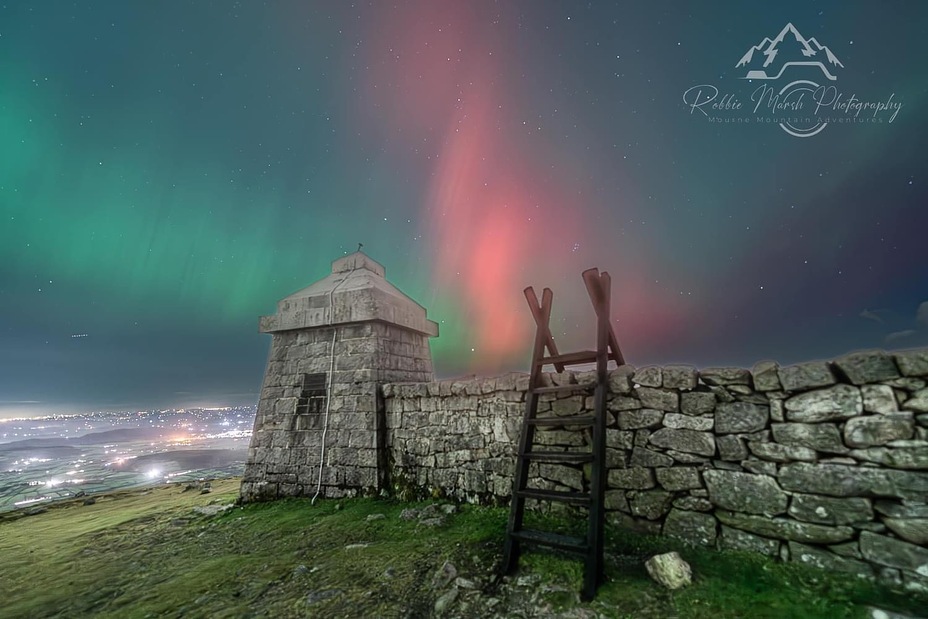
Slieve Bearnagh
Slieve Meelmore

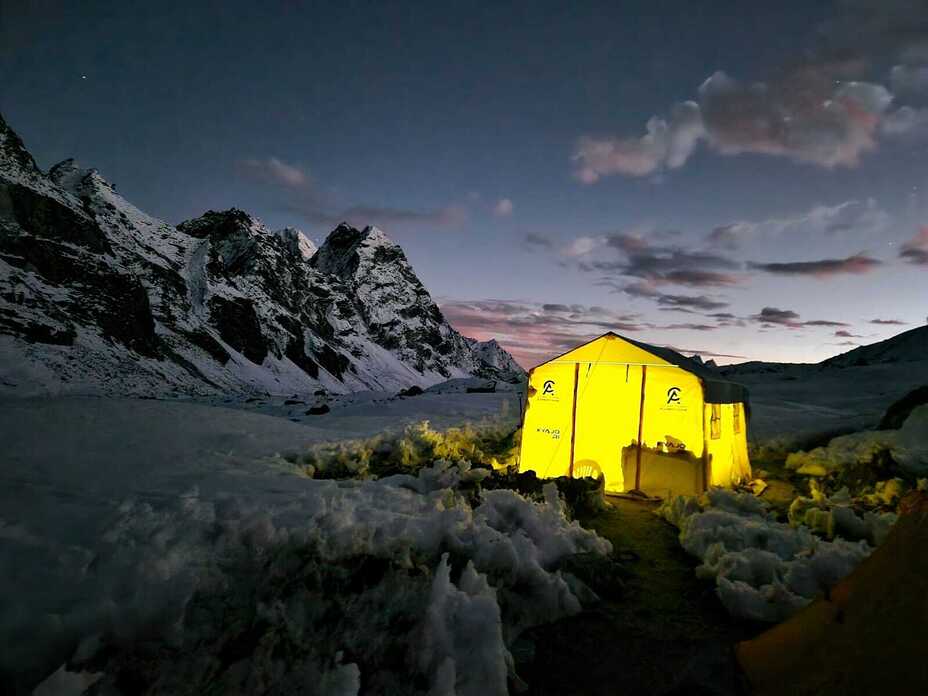
Cholatse
Cholatse Base camp
Pikes Peak
Pikes Peak From Garden Of The Gods Park

Cerro Fitzroy
Fitz Roy and Poansenot

Eagle Peak (Alaska)
Eagle Peak as seen from Eagle Lake

Puntiagudo-Cordón Cenizos
summit

Slieve Bearnagh
A break in the cloud

Illimani
Illimani desde la ciudad de La Paz en la noche

Y Garn (Glyderau)
Nearing summit

Dedicated mountain weather forecasts for more than 17800 major summits for climbers and mountaineers, provided for up to eight different elevations.
For each mountain, we track nearby weather stations reporting live observations multiple times per day, giving you real-time conditions alongside our forecasts. Gather all available information before heading out for climbing, mountaineering, or any mountain pursuit.
Our proven weather technology also powers Snow-Forecast.com and Surf-Forecast.com, trusted by millions worldwide. While our forecasts are thoroughly tested and reliable, we recommend cross-referencing multiple sources when planning your ascent—as you would with any mountain weather service.
With thousands of peaks in our database, we welcome your feedback on location details (coordinates, elevations, etc.) to keep improving accuracy for the global climbing community. Send your feedback.